

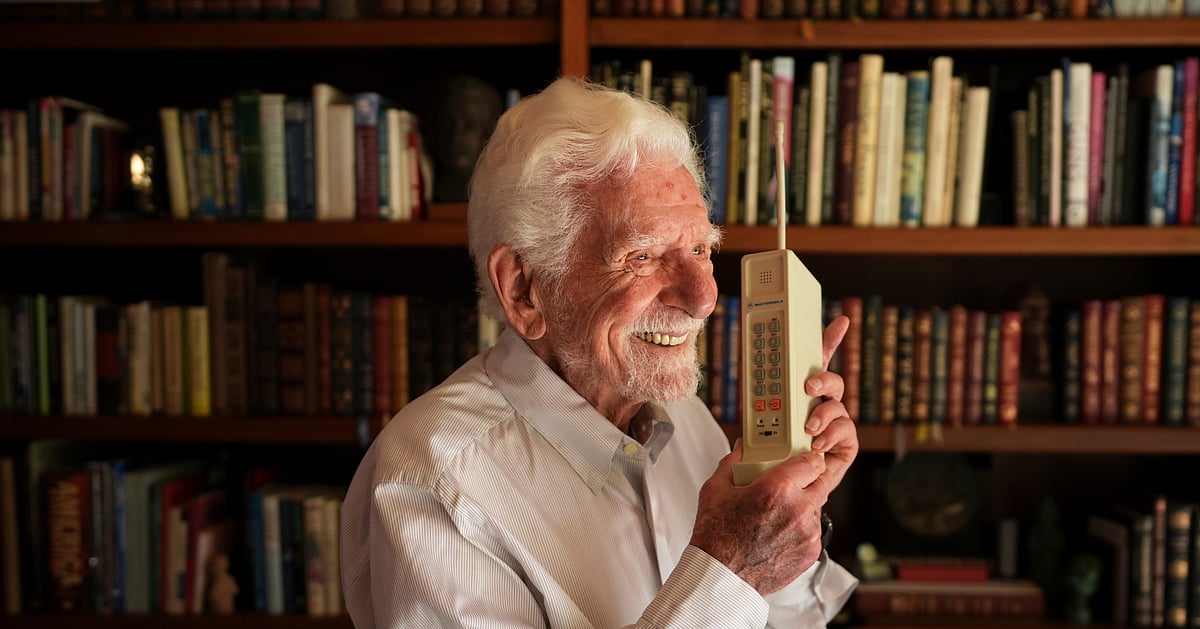
He pioneered the cellphone. It changed how people around the world talk to each other — and don’t
Global inequality is an issue
The mobile advantage is coming to rich countries faster than poor ones.
Adjusting to life in Russia when Nnaemeka Agbo moved there from Nigeria in 2023 was tough, he says, but one thing kept him going; WhatsApp calls with family.
In a country that has one of the world’s highest poverty and hunger levels despite being Africa’s top oil producer, Agbo’s experience mirrored that of many young people in forced to choose between remaining at home with family and taking a chance at a better life elsewhere.
For many, phone calls blur distance with comfort.
“No matter how busy my schedule is, I must call my people every weekend, even if that’s the only call I have to make,” Agbo says.
In Africa, where only 37% of the population had internet access in 2023, according to the International Telecommunication Union, regular mobile calls are the only option many have.
Tabane Cissé, who moved from Senegal to Spain in 2023, makes phone calls about investing Spanish earnings at home. Otherwise, it’s all texts, or voice notes, with one exception.
His mother doesn’t read or write, but when he calls “it’s as if I was standing next to her,” Cissé says. “It brings back memories — such pleasure.”
He couldn’t do it without the cell phone. And half a world away, that suits Marty Cooper just fine.
“There are more cell phones in the world today than there are people,” Cooper says. “Your life can be made infinitely more efficient just by virtue of being connected with everybody else in the world. But I have to tell you that this is only the beginning.”

Advertising by Adpathway






;)