

How Nato summit shows Europe and US no longer have a common enemy
Since the onslaught of the full Russian invasion of Ukraine in February 2022, the Nato allies have been united in their criticism of Russia and support for Ukraine; until now.
Since January, the Trump administration has not authorised any military aid to Ukraine and significantly reduced material support to Ukraine and criticism of Russia. Trump has sought to end the war rapidly on terms effectively capitulating to Russian aggression; his proposal suggests recognising Russia’s control over Crimea and de facto control over some other occupied territories (Luhansk, parts of Zaporizhzhia, Donetsk, and Kherson) He has also suggested Ukraine would not join Nato but might receive security guarantees and the right to join the EU.
Meanwhile, European allies have sought to fund and support Ukraine’s defensive efforts, increasing aid and military support, and continuing to ramp up sanctions.
Another sign of the differing priorities of Europe and Canada v the US, was the decision by Pete Hegseth, US secretary of defense, to step back from leadership of the Ukraine defence contact group, an ad-hoc coalition of states across the world providing military support to Ukraine. Hegseth also symbolically failed to attend the group’s pre-summit meeting in June.
Trump has long been adamant that Nato members should meet their 2014 commitment to spend 2% of their GDP on defence, and Rutte recognised that. In 2018, Trump suggested that this should be increased to 4 or 5% but this was dismissed as unreasonable. Now, in a decision which indicates increasing concern about both Russia as a threat and US support, Nato members (except for Spain) have agreed to increase spending to 5% of GDP on defence over the next 10 years.
Nato’s article 3 requires states to maintain and develop their capacity to resist attack. However, since 2022, it has become increasingly apparent that many Nato members are unprepared for any major military engagement. At the same time, they are increasingly feeling that Russia is more of a threat on their doorsteps. There has been recognition, particularly among the Baltic states, Germany, France and the UK that they need to increase their military spending and preparedness.
For the US to focus more on China, US forces will shift a greater percentage of the US Navy to the Pacific. It will also assign its most capable new ships and aircraft to the region and increase general presence operations, training and developmental exercises, and engagement and cooperation with allied and other navies in the western Pacific. To do this US forces will need to reduce commitments in Europe, and European allies must replace those capabilities in order to sustain deterrence against Russia.
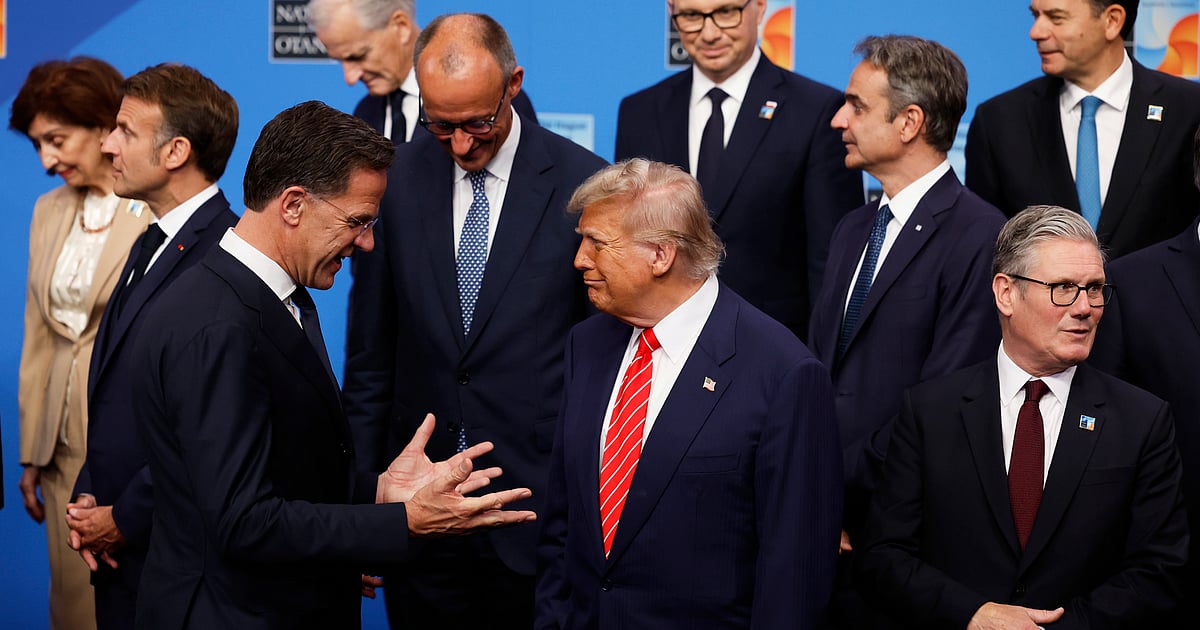
The bedrock of the Nato treaty, article 5, is commonly paraphrased as “an attack on one is an attack on all”. On his way to the Hague summit, Trump seemed unsure about the US commitment to Nato. Asked to clarify this at the summit, he stated: “I stand with it [Article 5]. That’s why I’m here. If I didn’t stand with it, I wouldn’t be here.”
Lord Ismay, the first secretary-general of Nato, famously (if apocryphally) suggested that the purpose of the alliance was to keep the Russians out, the Americans in and the Germans down. Germany is now an integral part of Nato, and the Americans are in, if distracted. But there are cracks, and Rutte will have his hands full managing Trump’s declining interest in protecting Europe if he is to keep the Russians at bay.
Andrew Corbett, Senior Lecturer in Defence Studies, King's College London
This article is republished from The Conversation under a Creative Commons license. Read the original article.

Advertising by Adpathway






;)