

The Silent Heist: Should America’s Financial Might Stop China’s Capital Betrayal?
(Analysis) In an Ohio bank, Sarah—a nurse diligently saving for retirement, family trips, and her grandchildren’s college funds—places her trust in a pension plan, assuming it will secure her future.
What if, without her knowing it, those funds were funneled into investments that back Beijing operations—producing advanced weaponry, powering expansive surveillance systems, or, in some cases, operating under lax labor standards?
This is not the product of an elaborate conspiracy but rather an unintended consequence of America’s capital markets—the largest in the world—where trillions of dollars flow daily from individual investors to global projects.
Financial institutions routinely include Chinese firms in funds marketed as safe havens, even as regulatory oversight struggles to keep pace with evolving cross-border investment dynamics.
Assessing the Scale and Complexity
Estimates suggest that about 5,000 Chinese companies have entered U.S. exchanges, collectively raising roughly $1 trillion in bonds and another $1 trillion in stocks over several decades.
Critics argue that some of these companies—not only involved in commercial ventures—are engaged in the production of advanced military systems such as hypersonic missiles, surveillance technology, and even components for naval vessels.
Many of these entities utilize Variable Interest Entities (VIEs), Cayman Islands-based structures that allow U.S. investors to obtain contractual rather than direct equity exposure.
This legal workaround helps them sidestep China’s restrictions on foreign ownership, raising questions about the transparency and true nature of these investments.
Even as millions of Americans believe they hold stakes in iconic tech firms, the reality is often more complicated.
The promise of ownership is diluted by convoluted financial arrangements, with Beijing sometimes securing more substantive control that remains hidden behind complex legal structures.
A Moment of Market Turmoil and a Shift in Policy
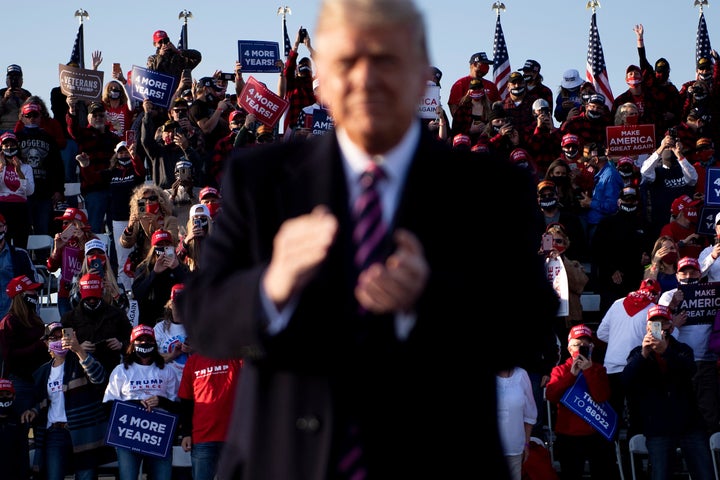
On April 2, 2025, the global financial landscape was rattled when President Trump declared “Liberation Day.”
Sweeping tariffs on Chinese goods sent shockwaves through global markets. Beijing retaliated with a series of counter-tariffs, which stoked fears of a looming recession across major economies.
Yet amid this turmoil came a quieter but potentially transformative policy move.
In an unprecedented measure, President Trump issued an executive order—the “America First Investment Policy”—which introduced outbound investment screening for the first time in U.S. history.
This directive aims to bar U.S. funds from flowing into Chinese firms tied to military modernization or human rights abuses.
Treasury Secretary Scott Besant encapsulated the policy’s moral imperative by asking, “Do the American people want to fund Uyghur repression or Chinese hypersonic missiles? Of course not.”
The Role of U.S. Financial Institutions and Regulatory Oversight
Wall Street’s involvement in this scenario is multifaceted. Financial institutions routinely package Chinese assets within “emerging market” funds, offering them to individual investors like Sarah.
Audits meant to ensure transparency falter here. Unlike global firms subject to rigorous oversight by the Public Company Accounting Oversight Board (PCAOB), Chinese companies enjoy a unique exemption granted in 2013 under a memorandum signed by the Obama administration.
This preferential treatment allows them to submit only self-reported summaries, shielding potential fraud and malfeasance.
As Roger Robinson—a former Reagan administration official who helped craft economic strategies against the Soviet Union—warns: “Wall Street doesn’t think it’s their job to protect national security or human rights… If it’s legal, they’re doing it.”
Xi’s Gamble: 125% Tit-for-Tat Tariffs Leave China Cornered in U.S. Standoff
Geopolitical Stakes and the Policy Debate
Rising U.S.-China tensions underscore the urgency of rethinking how American capital contributes to global power shifts.
With the U.S. holding a substantial portion of global wealth and the dollar underpinning much of worldwide trading, some suggest that redirecting investment might serve as a powerful instrument of policy. However, such a strategy carries significant risks and trade-offs.
Proposals to merge oversight functions among the Pentagon, Commerce, and Treasury—by instituting stricter audits and real-time scrutiny of new listings—offer a pathway toward greater transparency.
These measures could help delist companies that refuse to comply with enhanced standards. At the same time, critics caution that rapid regulatory action might destabilize markets or inadvertently penalize companies that contribute to innovation and global commerce.
The “America First Investment Policy” illustrates both the promise and the peril of using financial power as a tool of national policy.
Balancing Risks, Rewards, and Global Interdependencies
It is important to note that Chinese investments and cross-border capital flows are not universally negative. These financial ties have spurred technology transfers, bolstered economic growth, and occasionally contributed to global market stability.
The challenge lies in ensuring that these benefits do not come at the expense of national security or human rights. The call for reform does not suggest cutting off access to international capital outright.
Instead, it advocates for a tiered mechanism that differentiates between benign commercial activity and investments that may bolster strategic adversaries or enable abuse.

Advertising by Adpathway







;)