


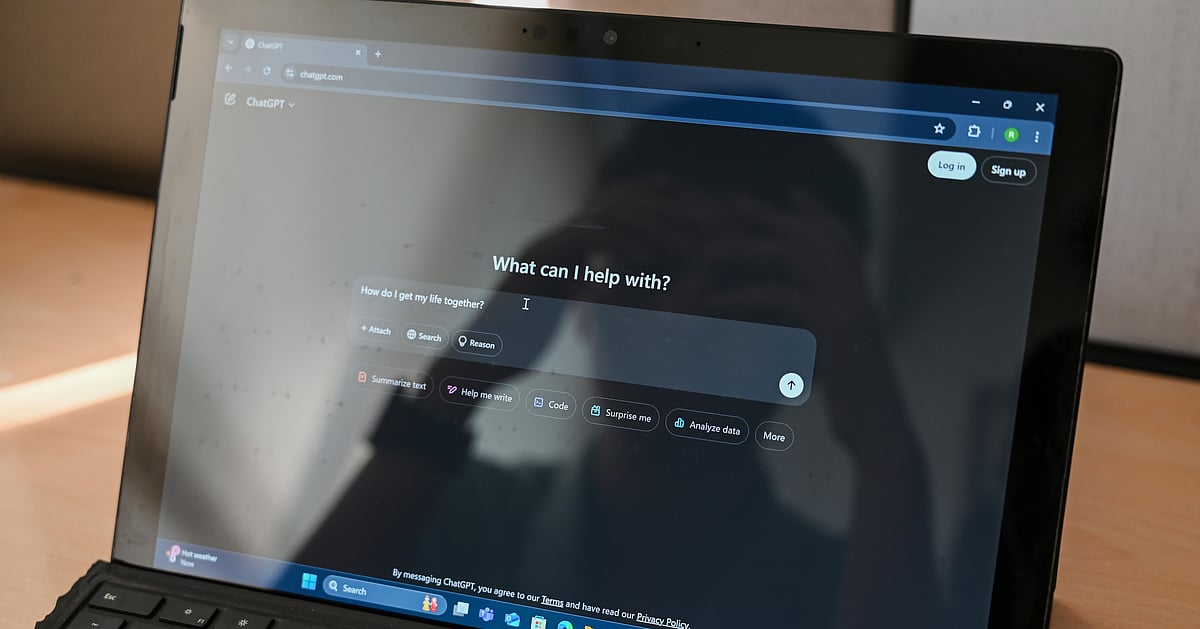
Reality check: Youngsters now confide in AI for therapy
"I was having a really stressful day and I put down an emotional problem I was facing on Chat GPT. Surprisingly, it gave me a really interesting perspective where I took action and changed the problem I was facing. I thought that was amazing and started using it more and more,” says Kimsuka Iyer, a 35-year-old creative consultant who started using Chat GPT a few months ago, using it to document her thoughts, dreams, and even therapy notes in between her monthly therapy sessions.
Iyer is not alone in this experience. With the rise of AI chatbots and generative AI in the last year or two, Dr Venkatesh Babu, a psychiatrist and founder of a health-tech company, Compathy Health, has noted an increasing number of young people consulting AI for therapeutic purposes. “We have noticed more and more people using AI – around 5-10 people among the 50 we see every day, mostly Gen Z. There’s a good proportion using AI before meeting a therapist, and also using it in sync with an ongoing therapy process after a couple of sessions,” he says. The data backs it up with the recently-released Annual Student Quest Survey by IC3 institute and Flame University, revealing that 85 per cent students turn to AI for counselling, particularly career counselling, 62 per cent counsellors are incorporating AI in their work, and 74 per cent believe it enhances the counselling process.
Why AI?
But why exactly would someone confide in a machine with their deepest fears before seeking out a human being? In a country with only 0.75 mental health professionals per 1 lakh people according to the National Mental Health Survey, for most people, it seems to be easy accessibility, affordability (with per session costs reaching upwards of `2,000), and feeling free from judgement. “With AI, you don’t have to book an appointment, you don’t have to call – it’s just one click away. And, people from my generation, we prefer chatting compared to a phone call,” says Anne Ananya, a student who used Chat GPT to ‘vent it all out’ at a time when she felt overwhelmed and had suicidal thoughts.

Advertising by Adpathway







;)