


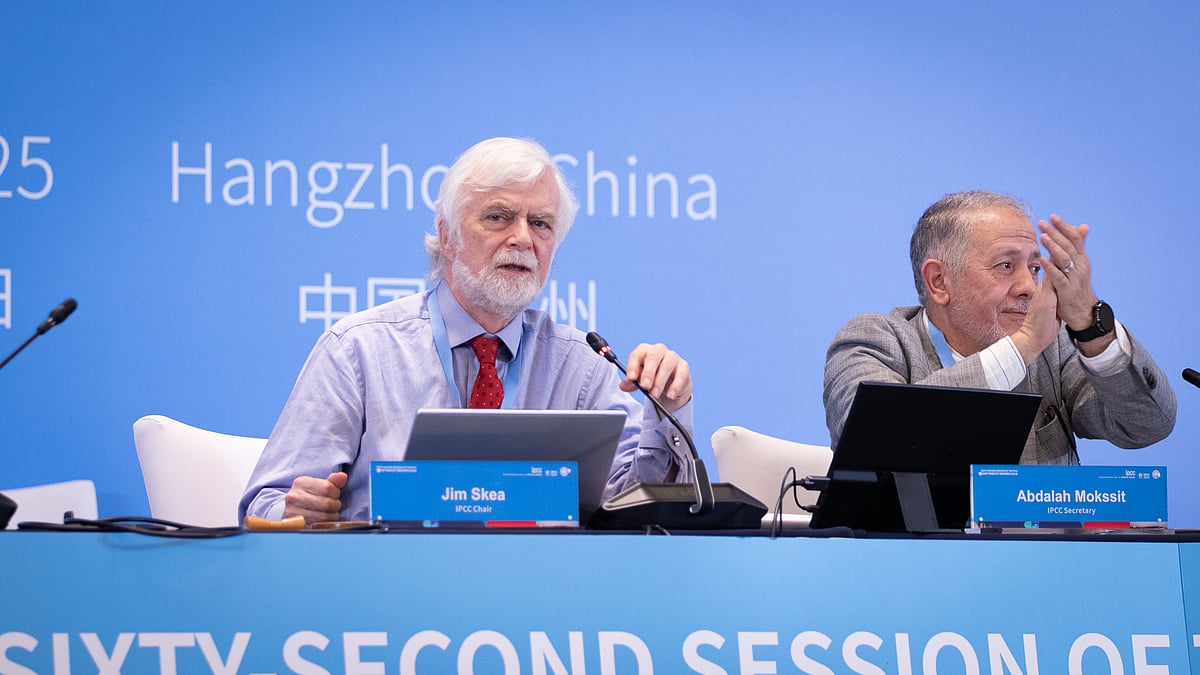
World in worse situation because of inaction, says UN climate science panel chief
"Scientists can sometimes say things in ways that are incomprehensible or difficult to understand. (But) I think our messages have been absolutely clear.
"We have pointed out the available measures, the options (including) renewable energy, changes in land use patterns, all of these things could contribute to constraining the increase in emissions.
I think you can even blame scientists for many things, but not for actions not taking place," the IPCC chief said.
The problem, he said, is not scientific messaging but broader social and political factors that influence public and policy decisions.
Asked whether scientists have failed to convince people that climate change is real, Skea said many resist climate policies because they feel imposed on them.
"I don't think we have failed in actually doing the job...Climate action takes place in the context of other social changes, and other things that are going on. And one of the messages that we have put across in the reports that probably don't get so much attention is that we need to take societies and people with us in climate change action," he asserted.
"Climate change action should not be something that's forced on people from above and some of the reaction we are getting to climate change policies comes because it appears to ordinary people that they are being forced to do things, forced to change," Skea added.
The IPCC chief said that the inaction, despite the best efforts by scientists, doesn't make him sad.
"When I get up in the morning, I just think about what has to be done next to move the agenda forward. I do not worry too much about the happy-sad spectrum. I am too busy to think about that."
On allegations of bias against the Global South in IPCC reports, he said scientific literature is increasingly shifting towards developing countries.
"(While) we have historically had strong scientific institutions in the North, that picture is changing. Climate-related publications increase by about 10 per cent per year in every IPCC cycle and the amount of literature we assess is roughly doubling.
"Much of this growth is occurring in developing countries, with Europe and China among the largest sources of new published research on climate change," he said.
Skea added that the United States is declining as a proportion of total publications, even though the absolute number is growing.

Advertising by Adpathway






;)