

India Take Final Steps To Design Key Aspects Of Proposed Trade Deal With US
Last Updated:
The Indian government has expressed its readiness to negotiate tariff reductions with the Trump administration on a bilateral basis.

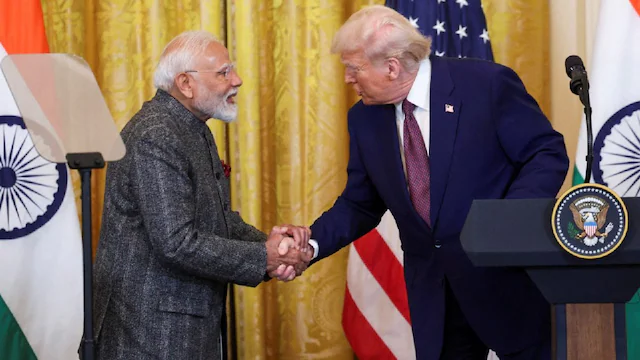
US President Donald Trump and PM Narendra Modi. (Reuters)
The government departments have already initiated the groundwork for the proposed trade deal with the United States, considering a range of areas- from “high tariffs" to exports between the two nations.
It comes days after Prime Minister Narendra Modi and US President Donald Trump agreed to negotiate the first phase of a bilateral trade agreement (BTA).
related stories
India and the US have announced plans to more than double bilateral trade to USD 500 billion by 2030 and to negotiate the first phase of a mutually beneficial, multi-sector BTA by fall 2025.
Sources indicate that the commerce department has started initial discussions with various government departments and ministries to better understand sector-specific dynamics, trade complexities, and India’s “offensive interests."
The departments have also been tasked with exploring potential requests from both sides, including the degree to which India may offer tariff concessions.
India and the US will sit together in the next couple of weeks to decide on the nature of the proposed trade agreement and finalise its broad contours, a senior official said on Monday.
“Give us a couple of weeks to decide what is the level of ambition in the first tranche (of the agreement) that we are looking at and what is the nature of the agreement that we will be arriving at. The two sides will need to sit together and try to finalise the broad contours," Additional Secretary in the Department of Commerce Rajesh Agrawal was quoted as saying by news agency PTI.
All Focus On Tariffs
The Indian government has expressed its readiness to negotiate tariff reductions with the Trump administration on a bilateral basis.
It argues that, given the neighbourhood dynamics with China, it cannot significantly lower duties for all trading partners. At the same time, India hopes to secure favourable terms on services and visas for businesses and professionals.
Despite repeated comments from US President Donald Trump about India’s “high tariffs," sources have pointed out that India’s average tariff rate of around 17% (which has been further reduced) is well within its WTO commitment to maintaining customs duties at approximately 50%.
While the government has already lowered tariffs on bourbon whiskey and motorcycles, benefiting brands like Harley Davidson, the US has taken advantage of these concessions and is pushing for further cuts. However, officials are keeping their strategy under wraps, concerned that disclosing it could undermine their negotiating position.

Advertising by Adpathway






;)