


Spice is nice in many cuisines — but for unexpected reasons
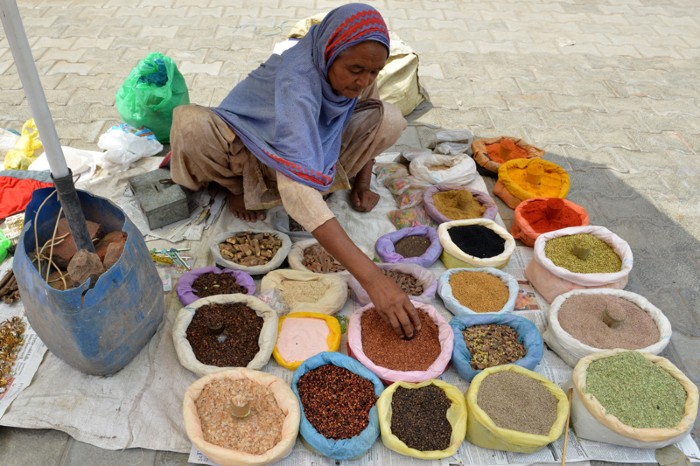
A spice vendor in the Indian state of Punjab, where the average number of spices per dish is among the highest in the cuisines studied. Credit: Narinder Nanu/AFP/Getty
Human behaviour
Spice is nice in many cuisines — but for unexpected reasons
Why do many hot countries have spicy food? This simple question has stumped scientists for decades, but an analysis of almost 34,000 recipes from around the world is providing clarity.
Some researchers suspect that certain cultures in hot climates began using chillies, lemongrass and other spices to take advantage of the ingredients’ antimicrobial properties and reduce the risk of food poisoning or food spoilage. To test the theory, Lindell Bromham at the Australian National University in Canberra and her colleagues analysed recipes from 70 cuisines, which between them contained 93 spices.
The researchers developed statistical models to see whether variables such as local crop diversity correlated with the spiciness of a region’s cuisine. Unlike previous studies, their work also took into account the geographic and cultural relationships between cuisines.
The team found that many other factors were much more strongly linked with spice use than was a country’s incidence of food-borne illness. Nor did spice use necessarily reflect local temperature.
Instead, patterns of spiciness were most strongly associated with socio-economic factors such as life expectancy and gross domestic product.

Advertising by Adpathway







;)