

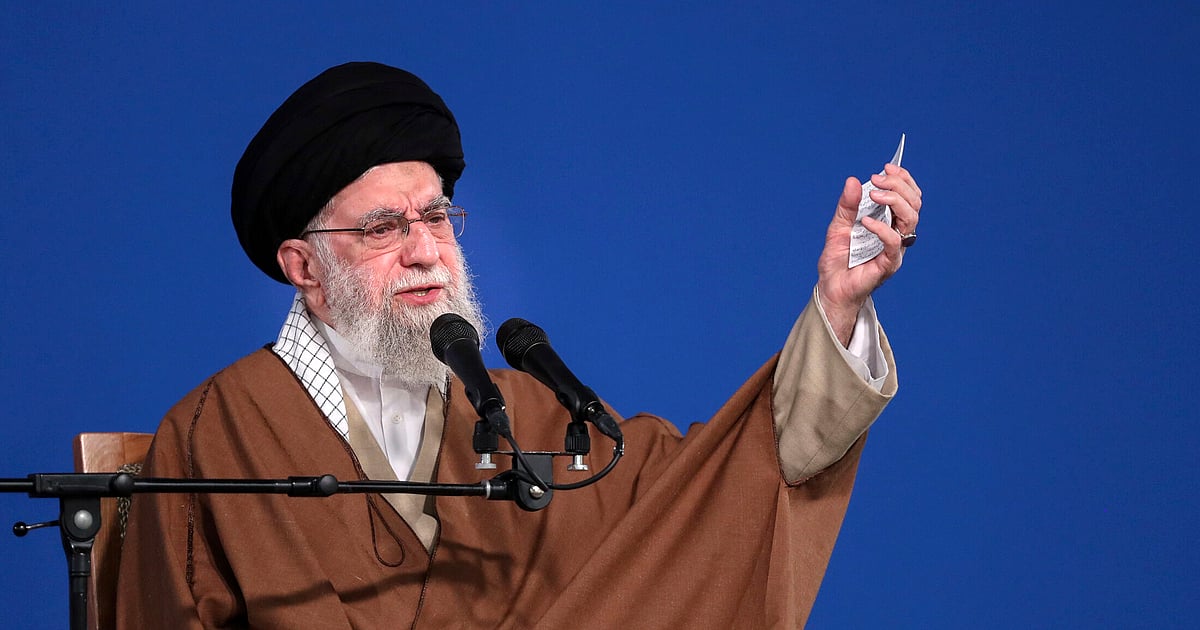
Israel wants him dead. Can Iran’s supreme leader survive his greatest crisis yet?
He fended off domestic challenges
The first major threat to Khamenei’s grip was the reform movement that swept into a parliament majority and the presidency soon after he became supreme leader. The movement advocated for giving greater power to elected officials – something Khamenei’s hardline supporters feared would lead to dismantling the Islamic Republic system.
Khamenei stymied the reformists by rallying the clerical establishment. Unelected bodies run by the mullahs succeeded in shutting down major reforms and barring reform candidates from running in elections.
The Revolutionary Guard and Iran’s other security agencies crushed waves of protests that followed the failure of the reform movement. Huge nationwide protests erupted in 2009 over allegations of vote-rigging.
Under the weight of sanctions, economic protests broke out in 2017 and 2019. More nationwide protests broke out in 2022 over the death of Mahsa Amini after police detained her for not wearing her mandatory headscarf properly.
Hundreds were killed in crackdowns on the protests, and hundreds more arrested amid reports of detainees tortured to death or raped in prison.
Still, the successive protests showed the strains in Iran’s theocratic system and lay bare widespread resentment of clerical rule, corruption and economic troubles. Trying to defuse anger, authorities often eased enforcement of some of the Islamic Republic’s social restrictions.
He built Iran into a regional power
When Khamenei took power, Iran was just emerging from its long war with Iraq that left the country battered and isolated.
Over the next three decades, Khamenei turned Iran around into as assertive power wielding influence across the Middle East. One major boost was the US’s 2003 ouster of Saddam Hussein, which eventually brought Iranian-allied Shiite politicians and militias to power in Iraq.
Iraq provided a linchpin in Iran’s Axis of Resistance, grouping Bashar Assad’s Syria, Lebanon’s Hezbollah, the Palestinian militant group Hamas and the Houthi rebels in Yemen. By 2015, the alliance was at its height, putting Iran on Israel’s doorstep.
The past two years brought a dramatic reversal
Hamas' Oct. 7, 2023, attack on southern Israel brought a massive Israeli retaliation on the Gaza Strip. It also brought a turnaround in Israeli policy. After years of trying to fend off and tamp down Iran's allies, Israel made crushing them it's goal. Hamas has been crippled, though not eliminated, even at the cost of the decimation of Gaza.
Israel has similarly sidelined Hezbollah — at least for the moment — with weeks of bombardment in Lebanon last year, along with a dramatic attack with booby-trapped pagers and walkie-talkies that stunned the group.
An even heavier blow to Hezbollah was the fall in December of Syria's Bashar Assad when Sunni rebels marched on the capital and removed him from power. Now, a government hostile to Iran and Hezbollah rules from Damascus.
Iran's Axis of Resistance is at its lowest ebb ever.

Advertising by Adpathway







;)