


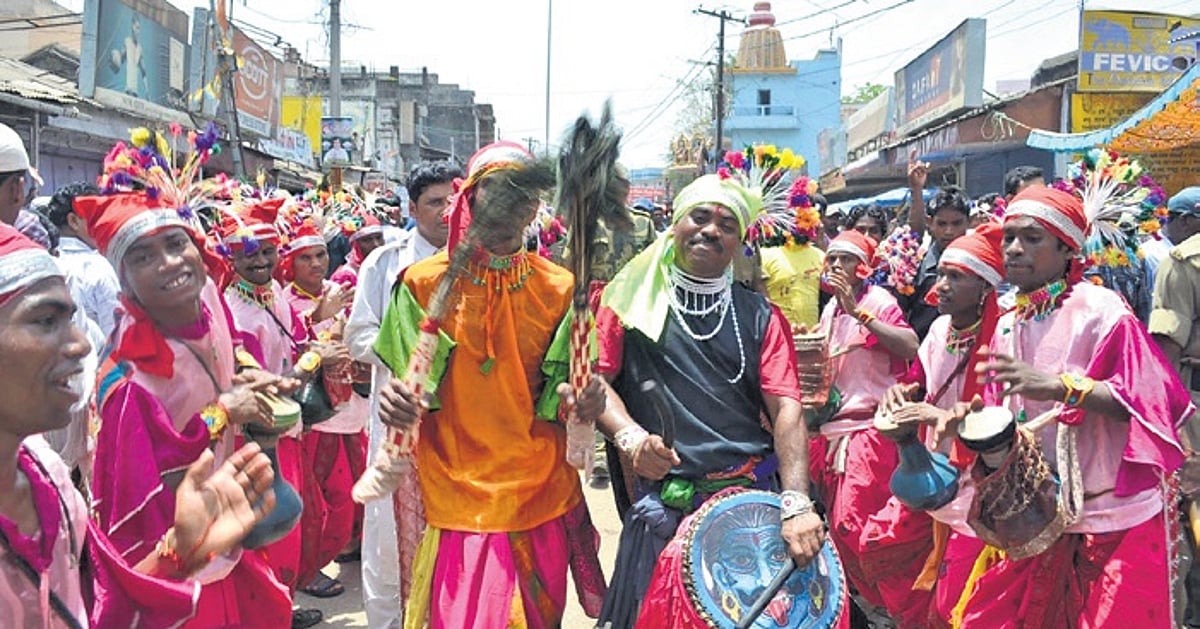
Sambalpur's Sital Sasthi celebrations life-support for dying folk dance, music forms
Today, Sital Sasthi is held in multiple temples across Sambalpur. “Just three major committees -Nandapada, Jhadupada, and Modipara - invite around 10,000 artistes,” Panda added.
Folklore researcher Sidharth Panda said Sital Sasthi not only provides a platform for folk artistes but bridges the gap between tradition and modernity. He noted that while organisers work year-round to showcase rare music and dance forms, artistes often adapt to modern tastes to ensure their art reaches all sections of society.
Panda highlighted the consistent popularity of Kandhei Nacha and Pasu Nacha among youth, and the anticipation for Sabara Nrutya, a dying folk dance. He said folk music, once nearing extinction, has seen a revival in the last two decades. “Earlier, folk instruments were common in household rituals, but with the rise of speakers and film songs, the tradition declined. Sital Sasthi played a crucial role in uplifting artistes and musicians who had lost hope,” he said.
In the past, many of these art forms, especially those from Western Odisha like Ghanta, Samprada, and Galpa, were in the danger of fading into oblivion. Today, Sital Sasthi is the only time in the year when they are paid to perform.
As the divine couple returns to their temples in a symbolic wedding procession on June 2, they will be accompanied not just by cheering devotees, but by the beat of legacy - one drum, one conch, one folk dance at a time. This year, over 8,000 artistes are set to perform across 21 organising committees. Art forms like Dulduli, Ghumura, Samprada, Danda Nacha, and Bagha Nacha will take centre stage, not just as entertainment, but as living traditions.

Advertising by Adpathway







;)