


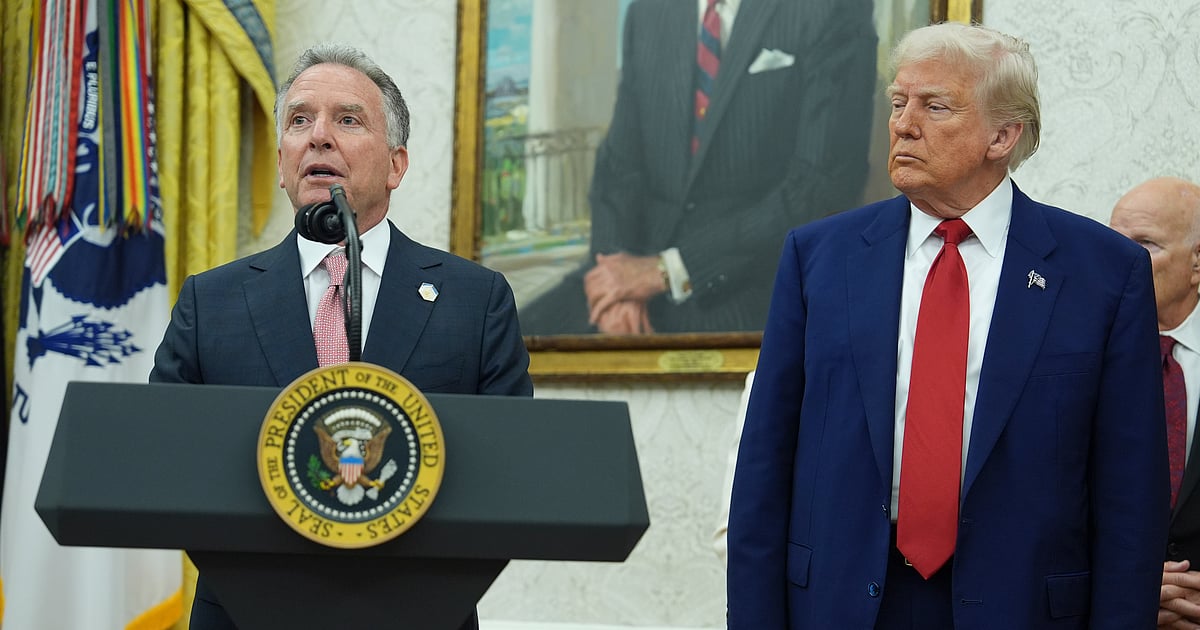
White House says Israel accepts new US proposal for temporary Gaza ceasefire; Hamas evaluating
What is the latest ceasefire proposal?
Witkoff has not publicized his latest proposal, but a Hamas official and an Egyptian official independently confirmed some of the details. They spoke on condition of anonymity to discuss the sensitive talks.
They say it calls for a 60-day pause in fighting, guarantees of serious negotiations leading to a long-term truce and assurances that Israel will not resume hostilities after the release of hostages, as it did in March. Israeli forces would pull back to the positions they held during the ceasefire Israel ended that month.
Hamas would release 10 living hostages and a number of bodies during the 60-day pause in exchange for more than 1,100 Palestinians imprisoned by Israel, including 100 serving long sentences after being convicted of deadly attacks.
Each day, hundreds of trucks carrying food and humanitarian aid would be allowed to enter Gaza, where experts say a nearly three-month Israeli blockade — slightly eased in recent days — has pushed the population to the brink of famine.
Why is it so hard to end the war?
Hamas-led militants stormed southern Israel on Oct. 7, 2023, killing some 1,200 people, mostly civilians, and abducting 251 hostages. More than half the hostages have been released in ceasefires or other deals. Israel has rescued eight and recovered dozens of bodies.
Israel's ensuing military campaign has killed over 54,000 Palestinians, mostly women and children, according to the Gaza Health Ministry, which does not say how many of the dead were civilians or combatants.
The offensive has destroyed vast areas of Gaza and displaced around 90% of its population of roughly 2 million Palestinians, with hundreds of thousands living in squalid tent camps and unused schools.
Hamas has been vastly depleted militarily and lost nearly all of its top leaders in Gaza. It most likely fears that releasing all the hostages without securing a permanent ceasefire would allow Israel to launch an even more devastating campaign to ultimately destroy the group.
Israel fears that a lasting ceasefire and withdrawal now would leave Hamas with significant influence in Gaza, even if it surrenders formal power. With time, Hamas might be able to rebuild its military might and eventually launch more Oct. 7-style attacks.
Netanyahu also faces political constraints: His far-right coalition partners have threatened to bring down his government if he ends the war too soon. That would leave him more vulnerable to prosecution on longstanding corruption charges and to investigations into the failures surrounding the Oct. 7 attack.
A broader resolution to the decades-old Israeli-Palestinian conflict appears more distant than ever.
The Palestinians are weak and divided, and Israel's current government — the most nationalist and religious in its history — is opposed to Palestinian demands for a state in Gaza, the West Bank and east Jerusalem, territories Israel occupied in the 1967 Mideast war.
The last serious peace talks broke down more than 15 years ago.

Advertising by Adpathway