


Europe’s Space Ambitions Stumble as German Rocket Fails
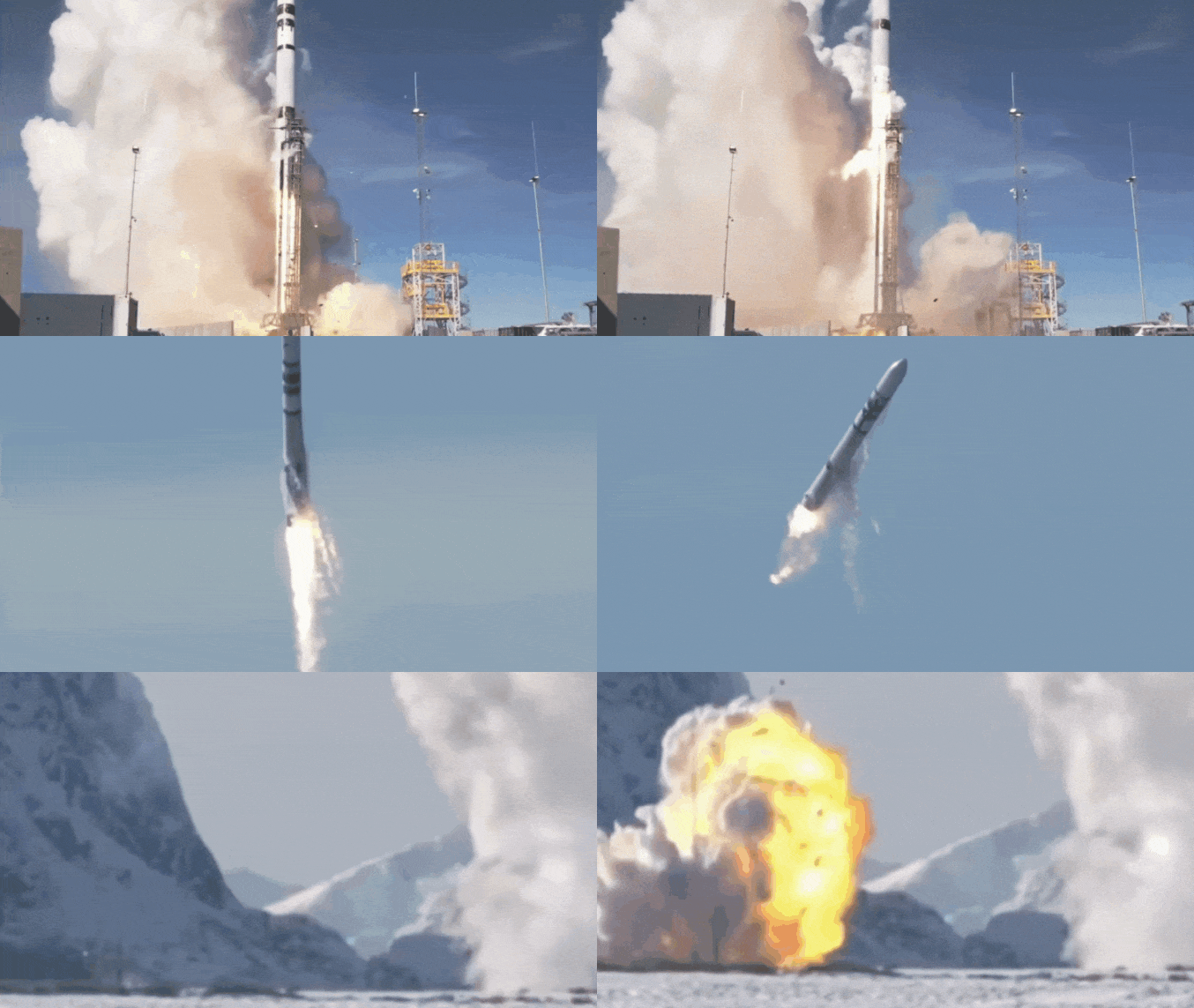
A German rocket, launched by Isar Aerospace, crashed 18 seconds after takeoff from Norway’s Andøya Spaceport on March 30, 2025, officials confirm.
The Spectrum, a 28-meter, two-stage vehicle, aimed to become mainland Europe’s first orbital launcher.
It tumbled, exploded, and sank into the Norwegian Sea, leaving Europe’s space race bruised but not broken.
Isar Aerospace, a Munich-based startup founded in 2018, designed the Spectrum to carry 1,000 kilograms into low Earth orbit.
Ten Aquila engines, burning liquid oxygen and propane, powered the rocket, which launched payload-free to test its systems.
Despite the failure, CEO Daniel Metzler praised the 30-second flight, noting it validated the termination system and gathered critical data.
The crash marks a setback for Europe’s “New Space” movement, where private firms like Isar challenge giants like SpaceX.
Europe lost Russian launch access after the 2022 Ukraine invasion, while delays plagued Ariane 6 and Vega-C.
Europe’s Space Ambitions Stumble as German Rocket Fails
The continent regained footing with Ariane 6’s March 6 commercial flight, yet small launchers remain key for sovereignty. Andøya, at 69° north, suits polar orbits, ideal for observation satellites.
Isar, backed by €400 million, including a €65 million boost in 2024, leads Germany’s space surge alongside Rocket Factory Augsburg and HyImpulse.
However, RFA’s rocket exploded during an August 2024 test, underscoring the risks. Rocket failures dog first flights globally—SpaceX’s Falcon 1 flopped thrice before success in 2008.
The Spectrum’s tumble hints at control issues, though Isar promises a full probe with Norwegian regulators. Two more rockets already sit in production, signaling resilience.
Germany’s Economy Minister Robert Habeck called the attempt a milestone, insisting Isar will shape Europe’s space future. The 2024 Draghi Report flags space as vital for EU competitiveness, urging investment.
Meanwhile, France’s MaiaSpace and Spain’s PLD Space vie for market share, as spaceports sprout from Portugal’s Azores to Britain’s Shetlands.
The brief flight yielded “tonnes of data,” a commentator noted, offering lessons for iteration. Europe’s space sector, once reliant on French Guiana, now pivots to local hubs like Andøya.
Isar’s vertically integrated model, mimicking SpaceX, aims to cut costs and scale output to 40 rockets yearly.
Failure stings, yet it mirrors the path of pioneers. The U.S. boasts 90+ SpaceX launches in 2024, while China and India advance steadily.
Europe’s fragmented approach contrasts with such centralized might, raising stakes for Isar’s next try.

Advertising by Adpathway







;)