


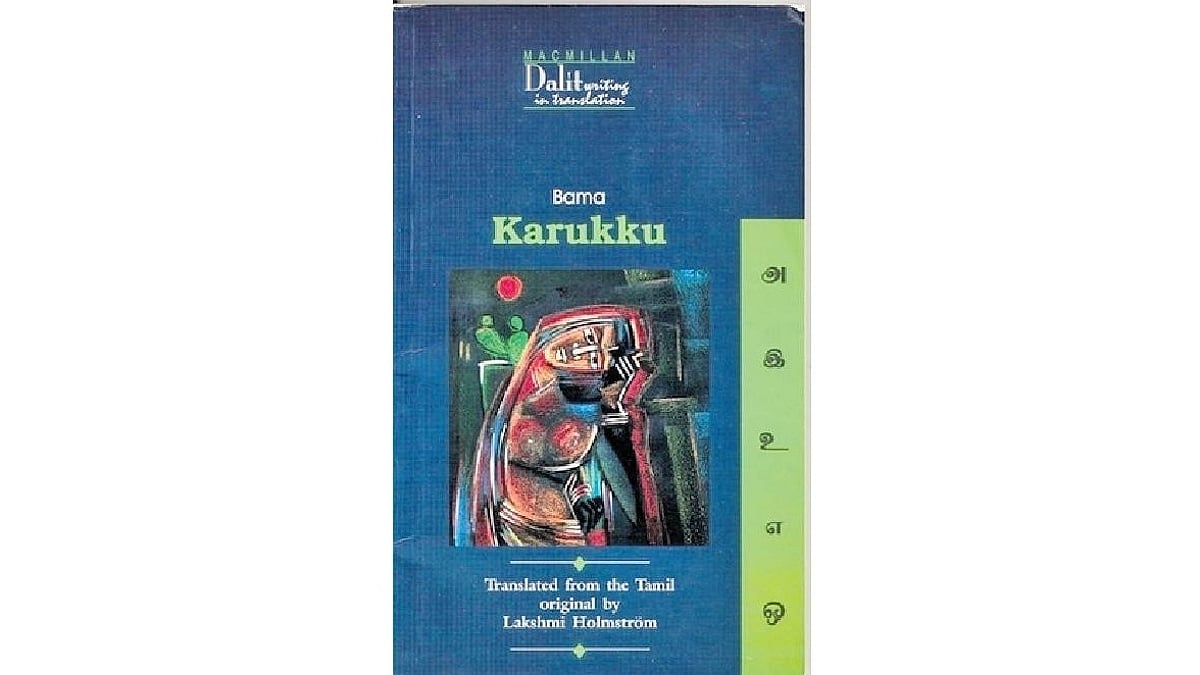
'The absence of I and We in mainstream narrative forced me to write': On writer Bama and her 'Karukku'
Dalit writings in translation paved the way for multiple scopes of research and reach. After the enormous success of Karukku in English, we see a surge in the translation of Dalit writings. Translation slowly becomes a commercial phenomenon. Consequently, Dalit texts attain mainstream consciousness. Further, a conscious choice of retaining the Tamil original title by the literary trio helped in the glocalisation of the translation market. Bama is firm that there are no title choices except Karukku; the trio is amicable in retaining the original title.
'Karukku', denoting the Palmyra leaves having sharp edges on both sides, becomes an allegorical address. The sharp edges resemble a double-edged sword-the plight of the Dalit people and the vehement protest of Dalit people. Bama explains, "There is a thirst for identity in dalit lives. The absence of I and We in mainstream narrative forced me to write. Moreover, most of the Dalit histories are being erased and hidden."
Bama is a teacher by profession, and Karukku becomes a social pedagogy with which it is unfolded as a testimony of a kid. Her teaching methodology aligns with her ideology. "The vision of children is unadulterated and innocent, but the adults adulterate their vision with their casteist foregrounds, which restricts their humaneness. Reforms need to be done at the grassroots." Bama adds.
Sadly, the commercialisation of Dalit literature happened simultaneously with its rise to prominence. Dalit texts are often viewed reductively through the lens of self-pity and a savior attitude. "There is this branding of Dalit writing existing. I don't see Brahmin, Naicker, chettiar, or vellalar writing. But, the branding needs to be denounced." Bama notes. This results in subaltern studies being taught for a namesake. Mini Krishnan also criticised, "Dalit writing in translation has remained the publishing industry's golden goose, but it is yet to bring about any real change in society's attitudes."
Only a few texts manage to break free from such rigid categorization and achieve universal significance. Bama's Karukku is unquestionably one among them, transcending labels to speak profound truths that resonate across all barriers of caste, language, and geography.
(Thalamuthukumar T | freelance Journalist, Literary agent-CIBF, Writer- Good City Artist Residency.)

Advertising by Adpathway







;)