


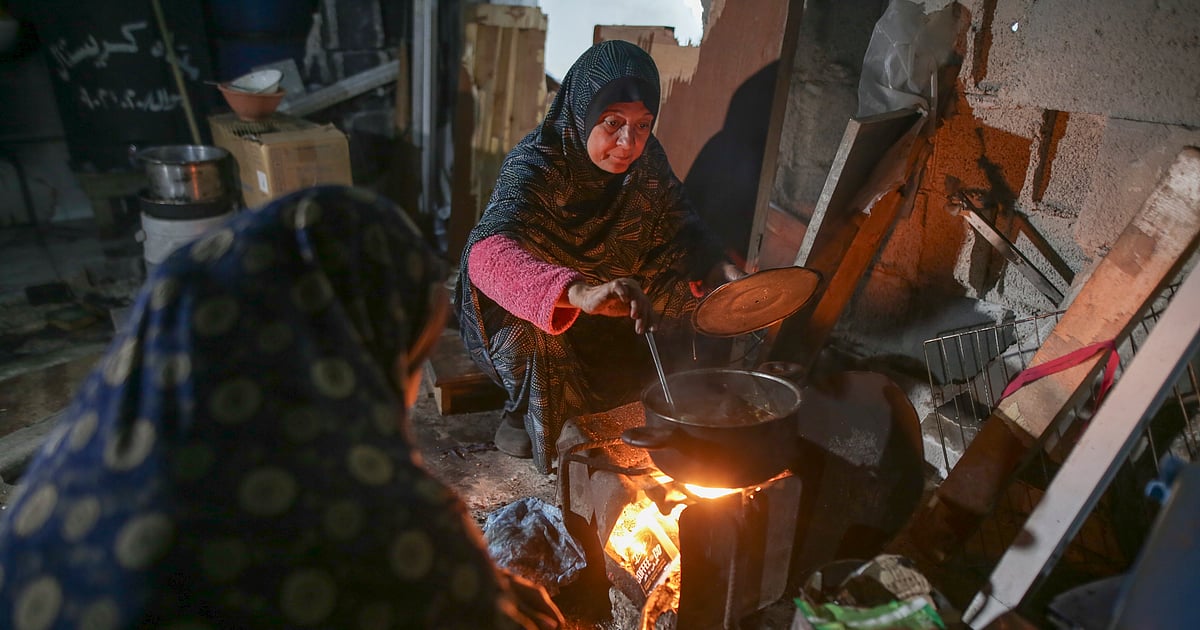
Loss, worry and prayers for better days mark Ramadan's start as fragile ceasefire holds in Gaza
JABALIYA: Before the war, the Muslim holy month of Ramadan was a festive time of increased worship, social gatherings and cheer for Fatima Al-Absi.
Together with her husband, the resident of Jabaliya in Gaza said she used to do Ramadan shopping, visit relatives and head to the mosque for prayers.
But the Israel-Hamas war has shredded many of the familiar and cherished threads of Ramadan as Al-Absi once knew it: her husband and a son-in-law have been killed, her home was damaged and burnt and the mosque she attended during Ramadan destroyed, she said.
“Everything has changed,” she said on Saturday as her family observed the first day of Ramadan. “There’s no husband, no home, no proper food and no proper life.”
For Al-Absi and other Gaza residents, Ramadan started this year under a fragile ceasefire agreement that paused more than 15 months of a war that has killed tens of thousands of Palestinians and devastated the Gaza Strip.
Compared to last Ramadan, many found relief in the truce — but there's also worry and fear about what’s next and grief over the personal and collective losses, the raw wounds and the numerous scars left behind.
“I’ve lost a lot,” said the 57-year-old grandmother, who’s been reduced to eking out an existence amid the wreckage. “Life is difficult. May God grant us patience and strength," she added.
Israel cut off all aid and other supplies to Gaza on Sunday to pressure Hamas to accept a new proposal to extend the first phase of the ceasefire. Hamas accused Israel of trying to derail the existing ceasefire agreement, but both sides stopped short of declaring the truce over.
“We’re scared because there's no stability," Al-Absi said and added that she’s praying for the war to end and that she can’t bear any more losses. She spoke before Israel announced the new proposal and the aid cutoff on Sunday.
Though Ramadan is still far from normal, some in the Gaza Strip said that, in some ways, it feels better than last year’s.
“We can’t predict what will happen next,” Amal Abu Sariyah, in Gaza City, said before the month’s start. “Yes, the country is destroyed and the situation is very bad, but the feeling that the shelling and the killing ... have stopped, makes you (feel) that this year is better than the last one.”

Advertising by Adpathway







;)